A customer buys what looks like your product on a marketplace, receives a cheap copy and leaves a furious one-star review. A fake social media account uses your logo to promote a scam. A factory abroad registers your brand name before you do. For companies of every size, these scenarios are no longer rare. They are part of doing business in a connected world.
Brand equity takes years to build and can be damaged in weeks. Protecting it requires legal, technical and linguistic preparation in every market where you sell.
The scale of the problem
Studies by the OECD and the EU Intellectual Property Office have estimated that trade in counterfeit and pirated goods amounts to hundreds of billions of dollars a year, a few per cent of world trade. Fashion, cosmetics, electronics, toys, spare parts and medicines are among the most affected sectors. The damage goes beyond lost sales: counterfeit chargers can catch fire, fake medicines can harm patients and poor-quality copies erode trust in the original brand.
Start with registration
The first line of defence is a registered trademark in every country that matters to you. Trademark rights are territorial. A registration in the EU does not protect you in China, the United States or Brazil.
The World Intellectual Property Organization runs the Madrid System, which allows companies to file one international application and designate many member countries at once. This is often cheaper and simpler than filing separately in each market. Many businesses also register their brand in local scripts, such as Chinese characters, Cyrillic or Arabic, because counterfeiters frequently exploit transliterated versions.
Monitoring online
Online marketplaces, social networks and domain names are the main channels for counterfeit sales and impersonation. Brand protection teams use monitoring tools to scan listings, ads and websites for unauthorised use of trademarks and images. Most large platforms offer brand registries and takedown procedures for rights holders.
- Register your brand with marketplace brand protection programmes.
- Monitor new domain registrations that resemble your brand name.
- Watch for fake accounts and ads using your logo or product photos.
- Keep evidence: screenshots, test purchases and dates.
Enforcement across borders
When monitoring finds infringements, companies may need to send cease-and-desist letters, file customs applications or take legal action. Each step involves documents in the local language and under local law.
France and French-speaking markets
France has a strong tradition of defending luxury and fashion brands, and its courts and customs authorities are active in fighting counterfeits. Rights holders bringing cases in France, Belgium or francophone Africa often need evidence, contracts and court filings in French. Specialist french legal translation services ensure that legal terms, product descriptions and expert reports are accurate and admissible.
Germany
German courts are a popular venue for intellectual property disputes in Europe, known for speed and expertise. Registrations, licence agreements and evidence from abroad usually need to be submitted in German. Using certified german translation services helps meet formal requirements and avoids delays caused by challenges to the translation.
Russian-speaking markets
Counterfeit goods and grey imports also circulate widely in Russian-speaking markets in Central Asia and Eastern Europe. Warning letters, marketplace complaints and customs notifications in these regions often need to be prepared in Russian. A precise translation from english to russian makes sure your claims are clear and taken seriously by local authorities and platforms.
Coordinating this kind of multilingual legal work is easier with a single translation agency managing all language pairs. A good agency combines legal linguists, translation memory and a central management system to keep terminology consistent. Centralized workflows also make it easier to track deadlines and costs across jurisdictions. For brand owners, one accountable partner beats juggling several freelancers.
Brand protection is only one part of a company's multilingual workload. Day to day, growing firms also need reliable business translation services for contracts, supplier agreements, marketing copy and investor materials that keep every market aligned. Coordinating these streams through one language partner reduces handoffs and keeps terminology consistent across legal, commercial and brand documents. Companies that plan this centrally avoid the scrambled, last-minute translations that so often precede an expansion.
Customs as a partner
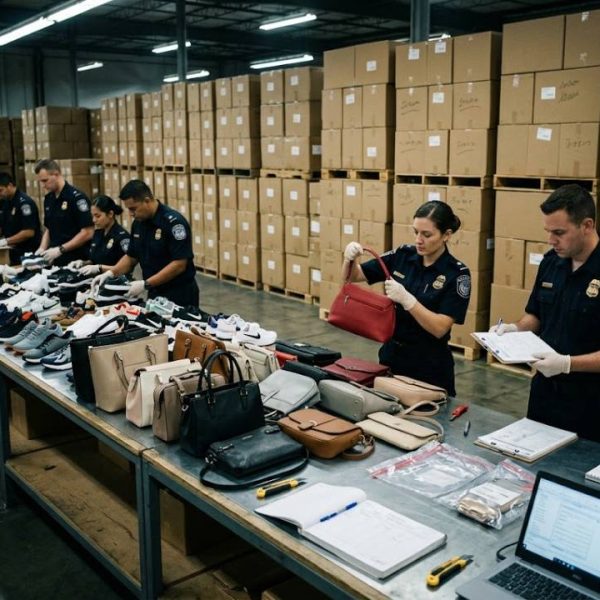
Customs authorities in the EU and many other regions can detain suspected counterfeits at the border if the rights holder has filed an application for action. Providing customs officers with clear product guides, showing how to distinguish genuine items from fakes, dramatically increases seizure rates. These guides should be available in the language of the customs service.
Protecting the brand from within
Not every threat comes from counterfeiters. Distributors who sell outside agreed territories, former partners who keep using your logo and employees who leak designs can also damage brand equity. Clear contracts, well-defined licence terms and good internal security reduce these risks. A strong brand protection strategy combines legal rights with everyday discipline.
Trust as the real asset
Ultimately, brand protection is about trust. Customers buy a brand because they believe in its quality, safety and values. Every counterfeit and every scam using your name chips away at that belief. Communicating openly with customers, explaining how to identify genuine products and acting quickly when problems appear all help maintain confidence.
Practical first steps
- Map the countries where you sell, manufacture or plan to expand.
- Register trademarks in each, including local-script versions where relevant.
- Set up online monitoring and marketplace brand registries.
- File customs applications in key import regions.
- Prepare template letters and evidence packs in the main languages you need.
- Educate customers on how to verify authentic products.
The best time to protect a brand is before it is copied. The second best time is today.